

You receive a project schedule. The toilet line says only: “white ceramic toilet, 12-inch rough-in.” At that point, the elongated vs round toilet decision becomes practical: does the project call for elongated toilets, round toilets, or a mix of both?
If the order is for one bathroom, choosing the wrong bowl shape may only cause some inconvenience. In a hotel, apartment development, retail program, or container order, however, it can trigger a chain of problems: the toilet projects too far into the room, the specified seat does not fit, a bidet seat cannot be installed, or the selected model does not meet the plumbing code adopted for the project location.
The real question is not which toilet is better. You need to decide which shape, or combination of shapes, fits the rooms, users, target market, and complete product specification.
The Basic Difference Is About Bowl Length and Shape
A round toilet has a shorter, more circular front. An elongated toilet has a longer oval front and usually provides more sitting area.
The usual measurement is taken from the center of the seat mounting holes to the front edge of the bowl. A round bowl is commonly about 16.5 inches long. An elongated bowl is commonly about 18 to 18.5 inches. These are useful reference figures, not guaranteed product dimensions. The Home Depot toilet-seat guide uses the same approximate ranges and still advises measuring the actual bowl.
That extra two inches matters, but it does not tell you the complete projection of the toilet. Tank shape, back-to-wall spacing, trapway design, and the ceramic body can all change the distance from the finished wall to the front edge.
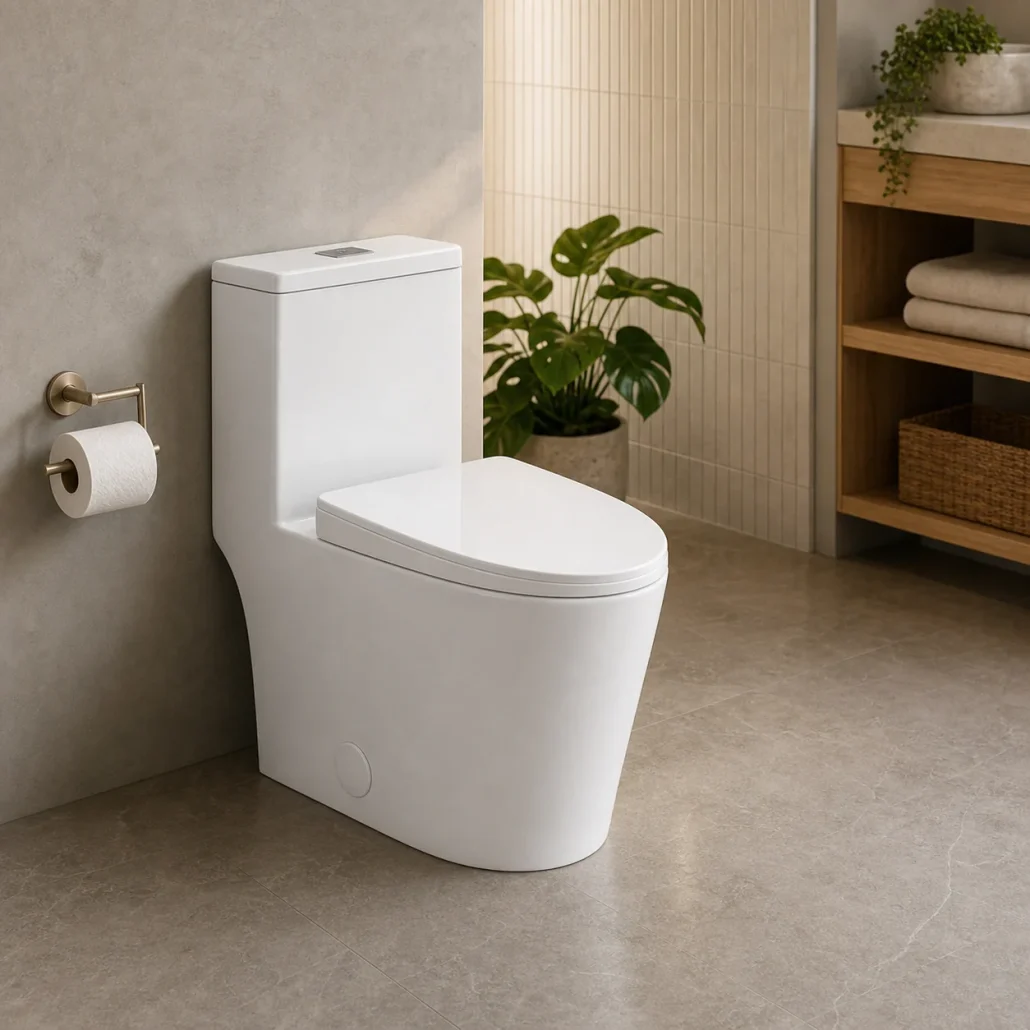
This is why you should request a dimensioned drawing for the exact model instead of choosing from a catalog photo.
Elongated vs Round Toilet at a Glance
| Buying Point | Elongated Toilet | Round Toilet |
|---|---|---|
| Bowl profile | Longer, oval front | Shorter, rounded front |
| Typical bowl length from seat holes | About 18 to 18.5 in | About 16.5 in |
| User experience | More sitting area for many adults | Compact and familiar in small rooms |
| Space requirement | Usually projects farther forward | Often saves front clearance |
| Public or employee facilities in IPC markets | Commonly specified and may be required by the adopted code | May not satisfy the applicable provision |
| Seat and bidet compatibility | Must use an elongated-compatible seat | Must use a round-compatible seat |
| Best use case | Main bathrooms, hospitality, public projects, accessible layouts when the full specification complies | Powder rooms, compact residential bathrooms, space-limited replacements |
The word “typically” is important. A compact elongated model can sometimes have a shorter overall projection than a bulky round-front model. Compare drawings, not labels.
Start With the Room, Not the Bowl
When floor space is tight, buyers often choose a round bowl automatically. That can be reasonable, but first check what is actually causing the conflict.
Is the front of the bowl too close to the door? Does a vanity drawer hit the toilet? Is a shower screen reducing usable clearance? Or is the rough-in wrong for the selected model?
These are different problems. Changing the bowl shape will not fix an incorrect rough-in, and a shorter bowl will not make a poor door swing compliant.
Ask for a plan view that shows the finished wall, drain center, door swing, vanity edge, shower screen, and toilet centerline. Then place the supplier’s dimensioned toilet drawing over that plan. For replacement work, confirm the rough-in separately. Our guide on how to measure toilet rough-in explains that measurement in detail.
For a multi-unit project, allow for construction tolerance. A model that fits only when every wall and drain is in the perfect position is a risky specification.
Comfort Matters, but Do Not Treat It as a Universal Rule
Many adults prefer an elongated bowl because the longer opening and larger sitting area can feel less cramped. That is one reason elongated bowls are common in hospitality, public washrooms, and the North American market.
Still, comfort is not determined by bowl shape alone. Seat contour, seat height, bowl width, bathroom layout, and the user’s body size all matter. A round bowl may work well in a small apartment bathroom or powder room where every inch of front clearance counts.
For samples, do not judge only the ceramic. Install the production seat, tighten the specified hinges, and check the complete unit. A seat that overhangs the rim, shifts under load, or leaves an uneven gap can make an otherwise acceptable bowl feel cheap.
If the project also specifies chair-height fixtures, review bowl shape and height as separate decisions. Our chair height vs standard height toilet guide explains why one term cannot replace the other.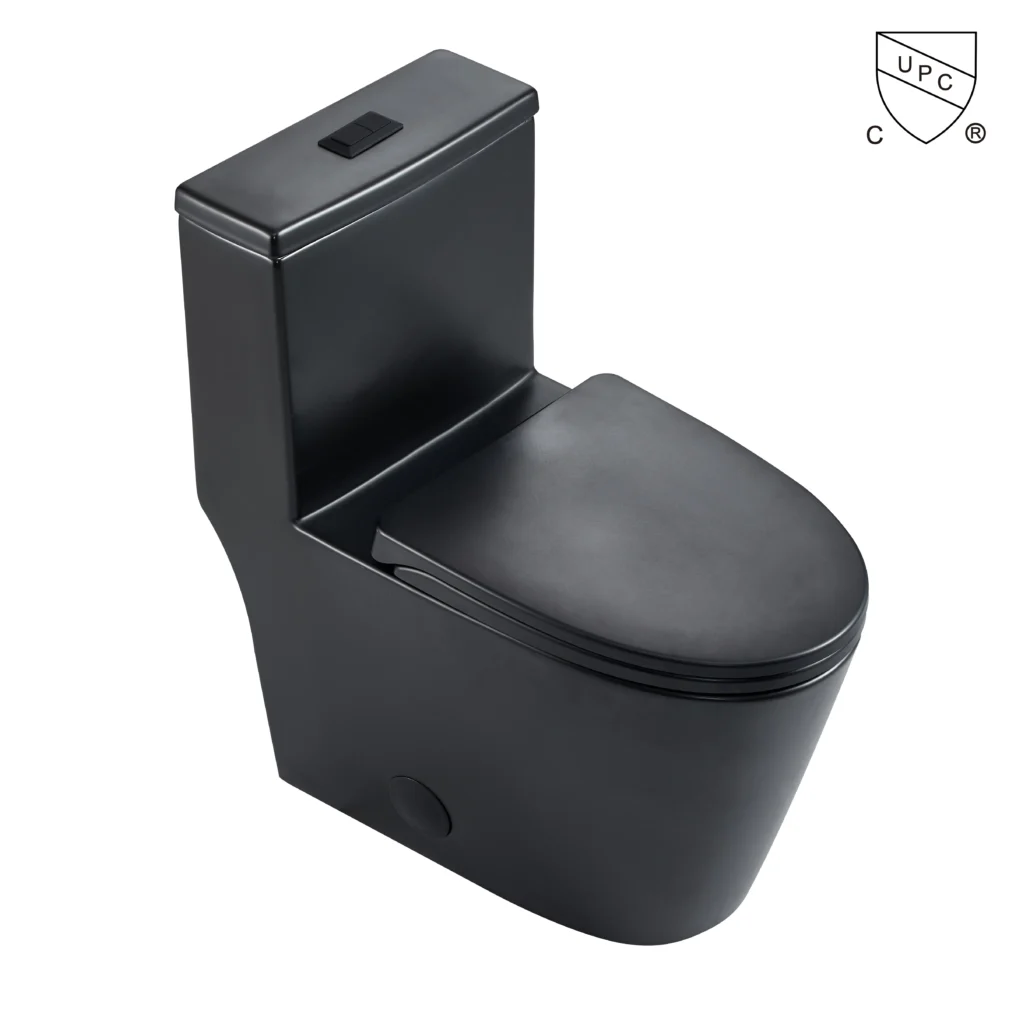
Elongated Does Not Automatically Mean Accessible
This is where many project schedules go wrong.
An elongated bowl may be part of an accessible toilet specification, but the shape itself does not make the toilet or the room accessible. Seat height, toilet centerline, clear floor area, grab bars, flush control location, door maneuvering space, and the adopted local rules also matter.
For the United States, the U.S. Access Board toilet-room guide explains that accessible water-closet criteria cover location, clearance, seat height, grab bars, flush controls, and dispensers. A product page that says “elongated” is not evidence that the completed installation complies.
There is also a separate plumbing-code issue. Section 425.2 of the 2024 International Plumbing Code states that water-closet bowls for public or employee toilet facilities must be elongated. Whether that section applies depends on the code adopted in the project location, the building type, and local amendments.
For export orders, the safe approach is simple: ask the buyer or project consultant to identify the required standard and code edition. Do not assume a U.S. requirement applies in Australia, Europe, the Middle East, or another market.
The Seat Must Match the Bowl
Round and elongated seats are not interchangeable. The hinge spread may look similar, but the front profile and length are different. A mismatch can leave exposed ceramic, create an overhang, or position the seat incorrectly.
Confirm these points before approving the order:
- Bowl shape and exact seat model
- Distance between the seat mounting holes
- Length from the hole centerline to the front rim
- Top-fix or bottom-fix mounting
- Seat material, such as PP or UF
- Soft-close and quick-release requirements
- Open-front or closed-front seat, when the project specification addresses it
- Availability of replacement seats and hinges
This check becomes even more important when the buyer plans to add a bidet seat. Some bidet seats need extra clearance between the mounting holes and the tank. Shape alone does not confirm compatibility. Ask for the bidet-seat installation template and compare it with the toilet drawing.
For ordinary seat installation and replacement checks, see our toilet seat installation guide.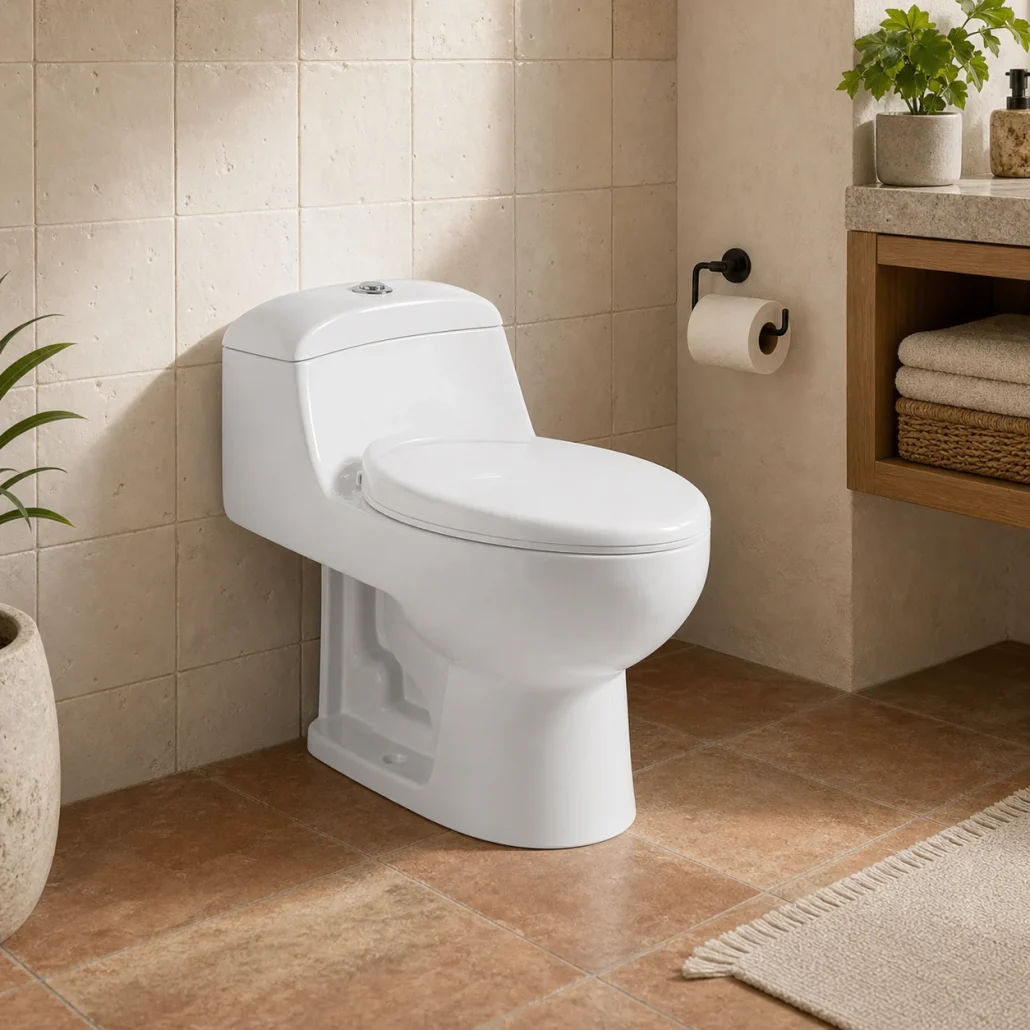
Bowl Shape Is Only One Line in the Toilet Specification
A quotation that says only “elongated toilet” still leaves too much open. The buyer may receive the right shape but the wrong height, rough-in, flushing configuration, water consumption, seat, or certification.
For each model, confirm:
- Model number and revision
- Bowl shape
- Overall dimensions and wall-to-front projection
- Rough-in and outlet type
- Bowl and seat height
- Flush type and rated water consumption
- Seat model, material, mounting, and color
- Required certification for the exact configuration
- Included fittings and installation hardware
- Packing size, loading quantity, and spare-parts plan
CLEANMAN’s one-piece toilet range includes elongated cUPC models such as CL-12335A and CL-12050A, along with compact models for projects where overall projection matters. Buyers should still match every claim to the exact model and suffix shown on the quotation and certification documents.
How Bowl Shape Affects a Product Range
For a distributor, the decision is not always “round or elongated.” The better question is how many of each shape the market needs.
An elongated model can serve as the main line for adult residential, hospitality, and commercial demand. A compact round model may cover older housing, powder rooms, and replacement jobs where space is limited. In some markets, one compact elongated model can reduce the need for a separate round SKU, but only if its overall dimensions and price fit the target segment.
Before adding both shapes, compare more than the purchase price. Two bowl shapes can mean separate seats, cartons, spare hinges, product photos, instruction manuals, certification records, and warehouse locations. That extra SKU can be useful, but it should earn its place in the range.
For an OEM order, ask whether the same glaze color, logo position, flush fittings, and carton style can be used across both models. Standardizing these details can reduce mistakes even when the ceramic shapes differ.
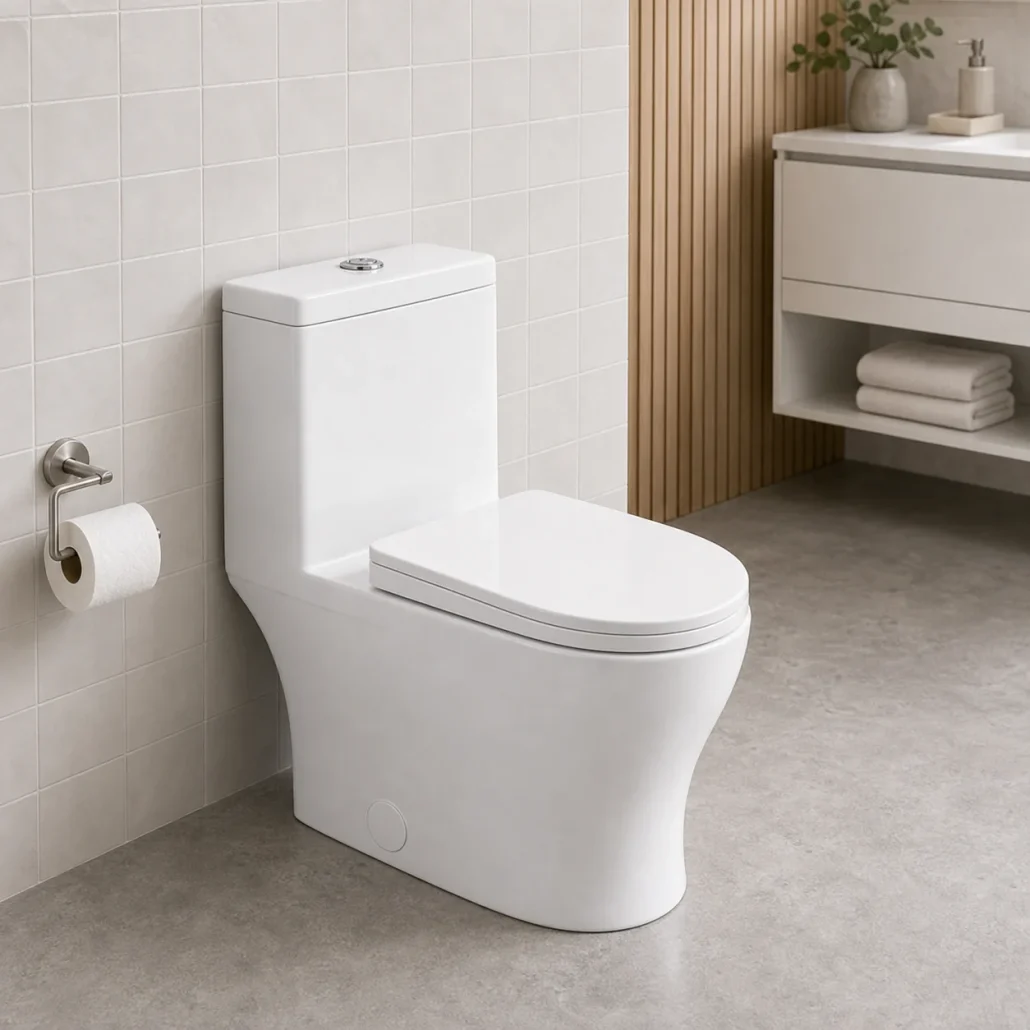
A Practical Sample-Approval Test
When the sample arrives, place it in a mock layout or mark the bathroom plan on the floor. Confirm the wall-to-front projection with the actual tank or back edge in its installed position.
Then check the seat. Open it, close it, remove it if it is quick-release, and sit on it. Check whether the lid hits the tank, whether the hinges remain centered, and whether the front edge follows the ceramic evenly.
Finally, compare the sample with the approved drawing, packing list, and quotation. If the drawing says elongated but the ordered replacement seats are round, that is not a small paperwork error. It will become an after-sales problem when the container arrives.
Choosing the Right Shape
Choose an elongated toilet when the project has enough front clearance, adult comfort is a priority, the target market expects an elongated bowl, or the applicable plumbing code requires it for the facility.
Choose a round toilet when the room is genuinely space-limited, the local market accepts the shape, and the shorter bowl solves a measured layout problem.
In both cases, approve the shape together with the exact drawing, seat, rough-in, height, flush system, certification, and packing details. Two inches at the front of a bowl can affect the room. One missing word on a purchase order can affect the whole shipment.
Frequently Asked Questions
1. What must be rechecked when a project changes from a round toilet to an elongated toilet?
First define when the change will happen. Before ordering, it is a specification change: recheck the dimensioned drawing, overall projection, seat, rough-in, and project requirements. If an installed round toilet will be removed and replaced, it is a site replacement: remeasure the existing drain position, water-supply position, toilet footprint, door and vanity clearances, and connection conditions. These are different decisions and should not be treated as a simple shape swap.
2. Do I need a different seat for an elongated toilet?
Yes. Use a seat designed for the bowl shape and confirm the mounting-hole spacing, length, hinge type, and tank clearance.
3. Is an elongated toilet always ADA compliant?
No. Accessibility depends on the complete fixture and room layout, including seat height, centerline, clearances, grab bars, controls, and the rules adopted for the project.
4. Should I specify elongated toilets for a public project?
Possibly. The 2024 IPC requires elongated bowls for the public or employee facilities covered by Section 425.2, but the project team must confirm the locally adopted code and any amendments.
5. Is a compact elongated toilet designed to save space?
In theory, yes. A compact elongated toilet is designed to reduce the overall projection while retaining an elongated bowl. However, “compact” is not one standardized size. Check the actual ceramic shape and the exact wall-to-front dimension on the drawing. For a tight layout, confirm the sample as well instead of relying only on the factory’s product description.
6. What should I send a supplier for an accurate quotation?
Send the target market, project type, quantity, rough-in or outlet position, maximum dimensions, preferred bowl shape and height, flush requirement, seat specification, certification requirement, and any approved drawings.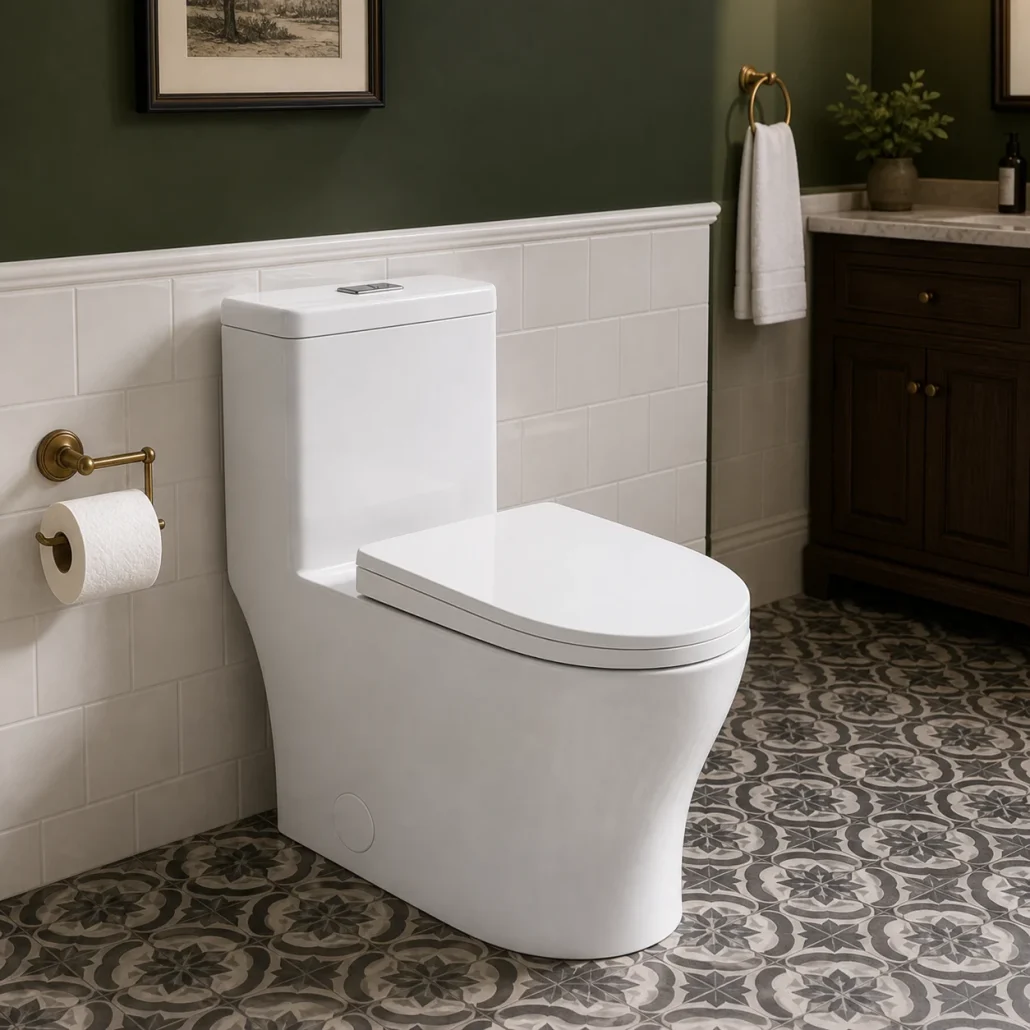
Build the Mix Around the Projects You Serve
You may not need to choose one bowl shape for your whole range. Many buyers carry elongated toilets for main bathrooms, hotels, commercial spaces, and public projects, while keeping round-front or compact models for small bathrooms, older buildings, and replacement work. Each type can serve a different part of the market.
CLEANMAN offers elongated, round-front, and compact toilet options for different project conditions. Send us your target market, project type, estimated quantity, rough-in or outlet position, maximum projection, preferred height, and any flushing or certification requirements. Contact us for recommended models, drawings, and specifications so you can compare the right options for your range or project.

